CONTENTS
OF THIS SECTION
Last updated
09/10/07 | | A Short Introduction to Thirukural: திருக்குறள் - ஒரு அறிமுகம், Dr.S.Jayabarathi | | On ThirukkuRaL - Professor C.R. Krishnamurti in Thamizh Literature Through the Ages | | திருவள்ளுவர் என்னும் நண்பர் - சுந்தர ராமசாமி, 2000 | "Tirukkural is the life, Tiruvasagam is the heart, and Tirumandiram is the soul of Tamil culture..."
Swami Shivananda in Background to the Tirukkural |  Thirukural - Sirkali Govindarajan Thirukural - Sirkali Govindarajan | | Thirukural - 1330 Couplets in Tamil | | unicode - Inaimathi - tscii - PDF - etext in Inaimathi - etext in Mylai | | Thirukural - English Translations | | tirukuRaL couplets in English (Kaviyogi cuttAnTanta pAratiyAr) unicode - TSCII - etext - pdf | | Thirukural - English Translation - Himalayan Academy, 1979 | | English Translation and Commentary of tirukkuRaL by Rev. Dr. G. U. Pope, Rev W. H. Drew, Rev. John Lazarus and Mr F. W. Ellis, first published in 1886 and reprinted by Saiva Siddhantha Publishing House (1962, 1982) pdf - unicode - tscii | 
Thirukural in Paintings
| | Thirukural on CD | Background to the Tirukkural - Swami Shivananda, The Divine Life Society, Rishikesh
".. Tirukkural is the life, Tiruvasagam is the heart, and Tirumandiram is the soul of Tamil culture..." | | Thirukural: Reflections in Tamil by M.Karunanidhi, sometime Chief Minister, Tamil Nadu | | திருக்குறள் - Thirukural -Dr. Kalaignar Urai "இமயமலைக்குப் பொன்னாடை போர்த்துகிற முயற்சியில் ஈ.டுபடுவதும், திருக்குறளுக்கு உரை எழுதுவதும் ஒன்றுதான் என்பதை நானறியாதவனல்லன் முன்னூற்று ஐம்பத்து நான்கு குறட்பாக்களைக் கொண்டு குறளோவியம் எழுதி முடித்தபிறகு ஆயிரத்து முன்னூற்று முப்பது குறட்பாக்களுக்கும் உரை எழுத வேண்டும் என்ற ஆர்வத்துடிப்பு என்னை ஆட்கொண்டது. அதனை நிறைவேற்றி மகிழ, `முரசொலி' நாளேட்டில் ஒவ்வொரு நாளும் நான் எழுதிய திருக்குறள் உரைகளின் தொகுப்பே இந்தநூல்.." | | Introduction to Thirukural & its Author in English and in Tamil - N.V.K. Ashraf | | Thirukural Translations in French - Hindi - Kannada -Russian - Arabic - Malayalam | | Thirukural in English - Angler Web Services | | Thirukural at Chennai Network | | Thirukural at Tamilpower | | TirukkuraL, the Ancient Tamil Book of Wisdom - Selected Chapters in Tamil with English Translation and Explanatory Notes | | The Tamil Thirukural Browser - Siddharthan Ramachandramurthi | | Thirukural Navarasa Natyam - a dance drama based on Kuralovium | | Thirukural Screen Saver | | Thirukural - on the World Wide Web - Dr.Kuppuswamy Kalyanasundaram | | Thirukural.Net | Thiruvalluvar Page
திருவள்ளுவர் பக்கம் at Tamil Neri Association | | Thiruvalluvar - His Economic Ideas and their Relevance Today - Fr. Felix Raj, SJ | | Thiruvalluvar at Rex Pay, Humanistic Texts | | Thiruvalluvar at Wikpedia | | About Thirukural and About Thiruvalluvar | Thiruvalluvar Comes to Life at Kanyakumari | | Thiruvalluvar on the Rocks in Mid Ocean at Kanyakumari | | Valluvar Kottam, Chennai | | Viral Nuniyil Kural - On Your Computer Screen | | International Thirukkural Conference - July 8-10, 2005 | State of Maryland Thirukkural Proclamation, July 2005
 | Books on Thirukural
at Amazon.com | | *Weaver's Wisdom: Ancient Precepts for a Perfect Life - American English Translation of the Thirukural - Satguru Subramuniyaswami | | *Thirukkural (Original in Tamil with English Translation) - W. H. Drew, John Lazarus (Translators) | *The Kural (Penguin Classics)
by Tiruvalluvar, P.S. Sundaram (Translator) | | *Sacred Kural of Tiruvalauva Nayanar English Translation by G.U. Pope | *Tirouvallouvar : Kural Traudit Du Tamoul (Tamil / French)
by Gnandu Diagou | * Tirukural
by Satguru Sivaya Subramuniyaswami | *Immortal Kural
by V.C. Kulandai Swamy | *The Bible and Kural : a comparison
by V. Antony John Alaharasan | Visit the
Language & Literature
Sections of the Library
| | |
| Thirukkural of Thiruvalluvar
திருவள்ளுவரின் திருக்குறள் 
- Subramaniya Bharathy
"இறைவன் மனிதனுக்குச் சொன்னது கீதை, மனிதன் இறைவனுக்குச் சொன்னது திருவாசகம், மனிதன் மனிதனுக்குச் சொன்னது திருக்குறள்" - Dr.S.Jayabarathi in an Introduction to Thirukkural
| "The following works of art and literature are among the most remarkable contributions of the Tamil creative genius to the world's cultural treasure and should be familiar to the whole world and admired and beloved by all in the same way as the poems of Homer, the dramas of Shakespeare, the pictures of Rembrandt, the cathedrals of France and the sculptures of Greece..... the Thirukural, one of the great books of the world, one of those singular emanations of the human heart and spirit which preach positive love and forgiveness and peace....." The Tamil Contribution to World Civilisation - Czech Professor Dr. Kamil Zvelebil in Tamil Culture - Vol. V, No. 4. October, 1956 "...On the most varied questions concerning the conduct of man to himself and to the world, Thirukural's utterances are characterised by nobility and good sense. There hardly exists in the literature of the world a collection of maxims in which we find so much lofty wisdom..." Albert Schwieitzer |

Thiruvalluvar Statue at Cape Comorin, Tamil Nadu
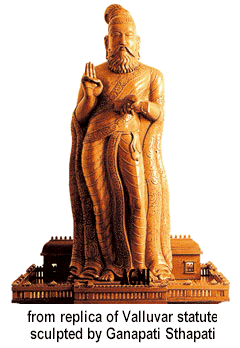
Thirukural written by Thiruvalluvar consists of three books, the first book on aram (the way or dharma), the second on porul (material or artha) and the third on inbam (joy or kama). There are 37 chapters in the first book, the first four called payiram or prefactory matter, the next twenty about ill-aram (the householders dharma) and the next thirteen about turavaram (the path of renunciation) The second book on porul contains seventy chapters, the first twenty dealing with kings and their duties, the succeeding thirty two chapters with the other matters concerning the state, and next thirteen, with sundry concerns. The third book on inbam contains twenty five chapters, the first seven being on pre marital love (kalavu) and the next eighteen on marital love. There are 133 chapters in all, each chapter contains ten distichs in the metre known as Kural and the work itself is now called by that name. Professor S.Vaiyarapuri Pillai comments in his well regarded History of Tamil Language and Literature: "Never before nor since, did words of such profound wisdom issue forth from any sage in Tamil land
Manu had features which were peculiar to his own time
His society was god ordained, hierarchic in its structure and unalterably fixed by the Karmic influence. It denied equality between man and man, in the eye of the law. Kautiliya was more a politician that statesman. He found in his great work room for a statecraft motivated by an unquenching thirst for conquest
Vatsyayana devoted himself in his Kamasutra to a treatment of carnal pleasure in all its ramifications and he had no eyes for the enobling aspect of love which is one of the most fundamental urges in human nature. Valluvar, the Tamil sage excels each one of these ancients in his respective sphere. He makes humanity and love the cementing force of society, and considerations of birth are of no account to him. His political wisdom is characterised by a breadth of vision at once noble and elevating. The sexual love which he depicts with inimitable grace and delicacy is idealistic, even if it be schematic and mannered. Its romance is ethereal and carries us to an atmosphere where purity of emotion, freshness and beauty reign supreme
The utter simplicity of his language, his crystal clear utterances, precise and forceful, his brevity, his choice diction, no less his inwardness, his learning, culture and wisdom, his catholicity and eclecticism, his gentle humour and wholesome counsel have made him an object of veneration for all time and his book is considered the Veda of the Tamils. The genius of the Tamil race has flowered to perfection in this great author
(and) the influence which his work, since its publication (more than 1400 years ago) exercised over the mind, life and literature of the Tamils is phenomenal." V.V.S.Aiyar, an early Tamil revolutionary wrote in the preface to his English translation of the Kural in March1915: "...Very few in the world outside of the Tamil country have heard the name of the poet whose work is presented here in a new English garb. And yet he is one of those seers whose message is intended not merely for their own age or country but for all time and for all mankind... Tiruvalluvar has given to the world a work to which, in perfection of form, profundity of thought, nobleness of sentiment, and earnestness of moral purpose, very few books outside the grand scriptures of humanity can at all be compared. Indeed his work is eulogised by the Tamil people as the Tamil Veda, the Universal Veda, the later Veda, the Divine Veda, etc. etc. It is a great pity that such a treasure should have been confined for so many ages to one single people even in Hindustan...
...It is my object not only to spread a knowledge of Tiruvalluvar's grand work as widely as possible in the world, but also to induce my own countrymen speaking languages other than Tamil to retranslate it into their different vernaculars, so that the words of a great moral teacher who intended his message for all the world and for all time may not fail at least now to reach the ears of the poorest of the poor and the simplest of the simple of his own countrymen, and to sow in their hearts the seeds of a noble, dignified, virtuous and manly life..
...In Part I, under the title of righteousness, our author treats of the life of the householder and of the life of the ascetic...What is the grand feature of the first part is its healthy outlook on life. 'The chiefest blessing,' declares our author, 'is an honourable home, and its crowning glory its worthy offspring.' How charming is his love for children! 'The touch of our children is the delight of the body.' 'It is only they who have not listened to the prattle of their little ones that are attracted by the guitar and the flute!' The poet insists greatly on the love of mankind and the honouring of guests as among the chief virtues of man...the first section ends... with a chapter on Glory, for 'They alone live who live without blemish; and they alone die who lived without glory.' It will thus be seen that it is a cheerful, smiling, benignant humanity that Tiruvalluvar wants to create in his country and the world...
"The fact that (Part II on Wealth) is about twice the size of the first and thrice the size of the third shows what importance the sage gives to politics and wealth in his scheme of life. As in the first part the poet shows himself as a moral teacher of the very highest order, so in this part he appears as a consummate statesman and thorough man of the world..." ....(And in Part III on Love) the most ardent admirers of 'Locksley Hall' will have to admit that the Tamil poet is easily the superior of Tennyson in analysing the infinite number of moods that chase each other in the agitated minds of lovers..
...Whether he speaks of moral duties or State policy, of the principles of action to be followed in order to succeed in life, or the varying emotions in the trembling hearts of lovers, everywhere Tiruvalluvar has sounded the depths of human thought. The prophets of the world have not emphasised the greatness and power of the moral law with greater insistence or force; Bhishma or Kautilya, Kamandaka or Ram Das, Vishnu Sharman or Machiavelli or Confucius have no more subtle counsel to give on the conduct of the State; 'Poor Richard' has no wiser say for raising up of clever businessmen; and Kalidasa or Shakespeare have no deeper knowledge of the lovers' heart and its varied moods than this weaver of Mylapore! Such is the universality of mind of this great seer who was born in the Tamil country but who belongs to all mankind..."
|  A Short Introduction to Thirukural: திருக்குறள் - ஒரு அறிமுகம், Written by Dr.S.Jayabarathi for Project Madurai, Original in Inaimathi/Anjal font - Converted to Unicode A Short Introduction to Thirukural: திருக்குறள் - ஒரு அறிமுகம், Written by Dr.S.Jayabarathi for Project Madurai, Original in Inaimathi/Anjal font - Converted to Unicode | தமிழில் உள்ள நூல்களிலேயே சிறப்பிடம் பெற்ற நூல் திருக்குறள். இது அடிப்படையில் ஒரு வாழ்வியல் நூல். மனித வாழ்வின் முக்கிய அங்கங் களாகிய அறம் அல்லது தர்மம், பொருள், இன்பம் அல்லது காமம் ஆகியவற்றைப் பற்றி விளக்கும் நூல்.
இந்நூலை இயற்றியவர் திருவள்ளுவர். இவருடைய இயற்பெயர் என்ன என்பதுவும் மேற்கொண்ட விபரங்களும் சரிவரத்தெரியவில்லை. இவரைப்பற்றிச் செவிவழிமரபாகச் சில செய்திகள் விளங்குகின்றன. ஆனால் அறுதியான வரலாறு கிடையாது. அந்தச் செய்திகளின் வாயிலாகப்பெறும் தகவல்களின்படி, இவர் வள்ளுவ மரபைச்சேர்ந்தவர் என்றும், மயிலாப்பூரில் வசித்தவர் என்றும் தெரிகிறது; இவருடைய மனைவியார் வாசுகி அம்மையார்.கற்பியலுக்கு மிகச்சிறந்த இலக்கணமாக விளங்கியவர். வள்ளுவர் தாம் எழுதிய முப்பால் நூலை தமிழ்ச்சங்கத்தில் அரங்கேற்றம் செய்ய மிகவும் சிரமப்பட்டதாகவும், முடிவில் ஒளவையாரின் துணையோடு அரங்கேற்றியதாகவும் அச்செய்திகள் வாயிலாக அறிகிறோம். திருவள்ளுவரை நாயனார், தேவர், தெய்வப்புலவர், பெருநாவலர், பொய்யில் புலவர் என்றும் சில சிறப்புப்பெயர்களால் அழைப்பர். பிற்காலத்தில் திருவள்ளுவர் பெயரால் வேறு சிலநூல்களை வேறு சிலர் இயற்றியுள்ளனர். அவை சித்தர் இலக்கியத்தைச் சேர்ந்தவை. திருக்குறள் இயற்றப்பட்ட காலம் இன்னும் சரியாக வரையறுக்கப்படவில்லை. கிருஸ்துவ சகாப்தத்தின் முன் பகுதியைச் சேர்ந்ததாகப் பலர் கருதுவர்.
பழந்தமிழ் நூல்களில் நான்கு பெரும் பகுப்புக்கள் உள்ளன. 1.எட்டுத்தொகை, பத்துப்பாட்டு ஆகியவை அடங்கிய பதினென்மேல்கணக்கு
2.பதினென்கீழ்க்கணக்கு
3.ஐம்பெருங்காப்பியங்கள்
4.ஐஞ்சிறு காப்பியங்கள்
ஆகியவை அவை.
அவற்றில் பதினென்கீழ்க்கணக்கு எனப்படும் பதினெட்டு நூல்களின் வரிசையில் "முப்பால்" என்னும் பெயரோடு இந்நூல் விளங்குகின்றது.
"அறம், பொருள், இன்பம்", ஆகிய மூன்று பால்களும் கொண்டமையால் "முப்பால்" எனப் பெயர் பெற்றது. முப்பால்களாகிய ஆகிய இவை ஒவ்வொன்றும் "இயல்" என்னும் பகுதிகளாக மேலும் பகுக்கப்பட்டுள்ளது. ஒவ்வொரு இயலும் சில குறிப்பிட்ட அதிகாரங்களைக் கொண்டதாக விளங்குகின்றது. ஒவ்வொரு அதிகாரமும் பத்துபாடல்களைத் தன்னுள் அடக்கியது.
இப்பாடல்கள் அனைத்துமே குறள் வெண்பா என்னும் வெண்பா வகையைச் சேர்ந்தவை. இவ்வகை வெண்பாக்களால் ஆகிய அக்காலத்திய முதல் நூலும் ஒரே நூலும் இதுதான்.
குறள் வெண்பாக்களால் ஆனமையால் "குறள்' என்றும் "திருக்குறள்" என்றும் இது பெயர் பெற்றது.
"பாயிரம்" என்னும் பகுதியுடன் முதலில் "அறத்துப்பால்" வருகிறது. அதிலும் முதலில் காணப்படுவது , "கடவுள் வாழ்த்து" என்னும் அதிகாரம். தொடர்ந்து, "வான் சிறப்பு", "நீத்தார் பெருமை", "அறன் வலியுறுத்தல்", ஆகிய அதிகாரங்கள்.
அடுத்துவரும் "இல்லறவியல்" என்னும் இயலில் 25 அதிகாரங்கள்; அடுத்துள்ள துறவறவியலில் 13 அதிகாரங்களுடன் முதற்பாலாகிய அறத்துப்பால் பகுதி முடிவுறுகிறது.
அடுத்து வரும் "பொருட்பாலி"ல் அரசு இயல், அமைச்சு இயல், ஒழிபு இயல் ஆகிய இயல்கள் இருக்கின்றன. அரசு இயலில் 25 அதிகாரங்கள் உள்ளன. அமைச்சு இயலில் 32 அதிகாரங்களும், ஒழிபு இயலில் 13 அதிகாரங்களும் உள்ளன.
கடைசிப்பாலாகிய "இன்பத்துப்பால்" அல்லது "காமத்துப்பாலி"ல் இரண்டு இயல்கள்; களவியலில் 7 அதிகாரங்களும், கற்பியலில் 18 அதிகாரங்களும் உள்ளன. ஆகமொத்தம் 7 இயல்கள்; 133 அதிகாரங்கள்; 1330 பாடல்கள்.
திருக்குறளை மொத்தம் 12000 சொற்களில் வள்ளுவர் பாடியுள்ளார். ஆனால் இவற்றில் ஐம்பதுக்கும் குறைவான வடசொற்களே உள்ளன.
"அகரம் முதல வெழுத்தெல்லாம் ஆதி
பகவன் முதற்றே யுலகு...."
என்று தமிழ் நெடுங்கணக்கின் முதல் எழுத்தாகிய "அ" வில் ஆரம்பித்து, 1330 ஆம் குறளாகிய,
"ஊடுதல் காமத்திற்கின்பம்; அதற்கின்பம்,
கூடி முயங்கப்பெறின்"
என்று தமிழ் மொழியின் கடைசி எழுத்தாகிய "ன்" னுடன் முடித்திருக்கிறார்.
வாழ்வியலின் எல்லா அங்கங்களையும் திருக்குறள் கூறுவதால், அதைச் சிறப்பித்துப் பல பெயர்களால் அழைப்பர்: திருக்குறள், முப்பால், உத்தரவேதம், தெய்வநூல், பொதுமறை, பொய்யாமொழி, வாயுறை வாழ்த்து, தமிழ் மறை, திருவள்ளுவம் என்ற பெயர்கள் அதற்குரியவை. பழங்காலத்தில் இதற்குப் பலர் உரை எழுதியுள்ளனர். அவற்றில் புகழ் வாய்ந்ததாக விளங்குவதும் அதிகமாகப் பயன்படுத்தப்பட்டதும் பரிமேலழகர் உரைதான். தற்காலத்திலும் பலர் உரை எழுதியுள்ளனர். அவற்றில் தற்சமயம் சிறப்பாகக் கருதப் படுவது திருக்குறள் முனுசாமியின் உரை.
தனிமனிதனுக்கு உரிமையானது இன்பவாழ்வு; அதற்குத் துணையாக உள்ளது பொருளியல் வாழ்வு; அவற்றிற்கெல்லாம் அடிப்படையாக விளங்குவது அறவாழ்வு. மனதே எல்லாவற்றிற்கும் ஆதார நிலைக்கலன்; மனத்துக்கண் மாசிலன் ஆதலே அனைத்து அறம்; அறத்தால் வருவதே இன்பம். அறவழியில் நின்று பொருள் ஈட்டி, அதனைக்கொண்டு இன்பவாழ்வு வாழ வேண்டும். அவ்வாறு உலகமாந்தரும் இன்பமுறச் செய்யவேண்டும். பொருளியலாகிய பொதுவாழ்வுக்கும் இன்ப இயலாகிய தனிவாழ்வுக்கும் அடிப்படை அறம்தான் என்பது திருக்குறளின் மொத்தமான நோக்கு. உலகிலேயே அதிக மொழிகளில் மொழிபெயர்க்கப்பட்டுள்ள நூல்களில் மூன்றாம் இடத்தைத் திருக்குறள் வகிக்கிறது. இதுவரை 80 மொழிகளில் மொழி பெயர்க்கப்பட்டுள்ளது. "இறைவன் மனிதனுக்குச் சொன்னது கீதை
மனிதன் இறைவனுக்குச் சொன்னது திருவாசகம்
மனிதன் மனிதனுக்குச் சொன்னது திருக்குறள்" | On ThirukkuRaL - Professor C.R. Krishnamurti in Thamizh Literature Through the Ages | | ThirukkuRaL (திருக்குறள்) written by ThiruvaLLuvar (திருவள்ளுவர்) is the most well known and highly regarded work in the series of PathineN kIz kaNakku. While all other Sangam works varied in their degree of popularity among Thamizh people, ThirukkuRaL proved to be the cream of Thamizh literature cherished both by the elite and the common man alike. The complete work of 1330 couplets is available. It has been described by Pope as "the perfect and most elaborate work of one master" The couplets in ThirukkuRaL contain two lines, the first usually of four feet and the second three. As usual the date of the author and personal accounts have been, and still are, the subjects of controversy among experts in the field. Based on the fact that ThirukkuRaL is referred to in MaNi mEkalai, a later literary classic, Zvelebil (1995) has concluded that the date should be c. 500 -550 A.D. The par excellence of ThirukkuRaL is usually attributed to four of its major unique features. The first pertains to the ability of the poet to concentrate certain profound thoughts in two short lines of the veNpA (வெண்பா) type. It is said that the poet has pierced the atom and has packed within it the seven seas of the world (அணுவைத் துளைத்து எழு கடலைப்புகுத்தி) . The second trait refers to the maxims proposed on various aspects of human endeavours ranging from righteousness through worldly pursuits to love. It is no wonder that any talk by the present day Thamizh scholars on any topic is studded with quotes from ThirukkuRaL. The third attribute of ThirukkuRaL lies in its secular and cosmopolitan view of righteousness which would be acceptable to mankind as a whole, transcending linguistic, religious and national boundaries. At a time when the order of the day was an elaboration of the akam theme, ThirukkuRaL was not only different in its literary style but also in its emphasis on the badly needed set of moral codes for human conduct. He was a social reformist and stood firmly against prostitution. He condemned the consumption of alcohol and meat eating. The final significance of ThirukkuRaL is that it opens up with an invocation wherein the poet pays homage first to the Absolute Being and not to any particular deity or godhead and secondly to all learned people. அகர முதல எழுத்தெல்லாம் ஆதி
பகவன் முதற்றே உலகு.
A as its first of letters, every speech maintains;
The Primal Deity is first through all the world's domains. (No.1)
கற்றதனாலாய பயனென்கொல் வாலறிவன்
நற்றாள் தொழாரெனின்.
No fruit have men of all their studied lore
Save they the Purely Wise One's feet adore (No.2)
The couplets bear testimony to the catholic perception of the author. The vEdhAntic philosophy of the oneness of the Supreme expressed in these lines and the lack of sectarian dogmas of individual religions have appealed to righteous people in India and elsewhere. The translation of ThirukkuRaL into English by Pope in the nineteenth century is an example of its secular nature. In a world divided and torn on the basis of religion and language, the Thamizh people can be proud to have in their ancient literature a work which has the moral dictum to alleviate the social and ethical dilemmas facing the world today. It is significant that ThirukkuRaL has been composed in pure Thamizh and the very few words introduced from Sanskrit have been made to assume a Thamizh garb (Pope). The need to compress the meter into two lines has necessitated the omission of the finite verbs. Thus the use of ellipsis (தொகை) became indispensable and characteristic of the couplets. ThirukkuRaL is divided into three parts (பால்): a) virtues (அறத்துப்பால்), 38 chapters, (அதிகாரம்), 380 couplets; b) worldliness (பொருட்பால்),70 chapters, 700 couplets; c) love (காமத்துப்பால்), 25 chapters, 250 couplets).
The highest priority given to virtue in ThirukkuRaL could be appreciated by the fact that it is the topic of discussion in the first of the three part series (அறத்துப்பால்). This priority has never been seen before in any literary work in Thamizh upto that time. The second chapter on the excellence of rain, (வான் சிறப்பு) depicts the agricultural background of the author and the dependence of rural folks on rain for their prosperity. Immediately following the greatness of the ascetics, ThiruvaLLuvar emphasizes family and personal virtues. Collectively these verses represent the didactic motivation of the author in undertaking this timely and laborious work. In the second part on worldliness, (பொருட்பால் ) the importance of learning and the duties of the state and the individual has been discussed. கற்க கசடறக் கற்பவை கற்றபின்
நிற்க அதற்குத் தக.
So learn that you may full and faultless learning gain
Then in obedience meet to lessons learnt remain (No. 391)
The need to be able to get along well with others, even if one is highly educated, is stressed in the following couplets: உலகத்தோடு ஒட்டவொழுகல்பல கற்றும்
கல்லார் அறிவிலாதார்.
Who know not with the world in harmony to dwell
May many things have learned, but nothing well (No. 140)
The idealism and convictions of ThiruvaLLuvar are brought to light in his placement of chastity in the chapter on worldliness, (பொருட்பால்) rather than in the section on love, (காமத்துப்பால்) பெண்ணிற் பெருந்தக்க யாவுள கற்பென்னும்
திண்மை யுண்டாகப் பெறின்.
If woman might of chastity retain,
What choicer treasure doth the world contain (No. 54)
In the third chapter on love, (காமத்துப்பால்)ThiruvaLLuvar has placed the seven sections on furtive love (களவியல்) ahead of wedded love (கற்பியல்) in keeping with the traditions of the time. The following verses in the chapter on furtive love describe the recognition of the signs of love in a maiden by the hero: யானோக்குங் காலை நிலனோக்கு நோக்காக்கால்
தானோக்கி மெல்ல நகும்.
She looked and looking drooped her head
Ofn springing shoot of love 'tis water shed. (No. 1094)
குறிக்கொண்டு நோக்காமை யல்லால் ஒருகண்
சிறக்கணித்தாள் போல நகும்.
She seemed to see me not; but yet the maid
Her love, by smiling side-long glance, betrayed. (No. 1095)
The couplets in the chapter on furtive love and their placement prior to wedded love support the contention that the furtive love was a socially accepted practice. Furtive love culminates in married life in which the commitments and responsibilities of the couple towards each other and towards their families and society at large have been well defined. These verses would be particularly relevant today when genuine commitment between married couples is gradually becoming conspicuous by its absence. One also wonders at what point in history the financial and religious inputs began to creep into the matrimonial relationships in the Thamizh social fabric ! Two subtle points can be noticed whenever the akam, (அகம்) concepts are discussed : a) the phraseology for the description of human emotions is made in a very polished manner and b) ThiruvaLLuvar reiterates his warnings on unchaste behaviour at every opportunity. பொருட் பொருளார் புன்னலம் தோயார் அருட் பொருள்
ஆயு மறிவி னவர்.
Their worthless charms, whose only weal is wealth of gain,
From touch of these the wise, who seek the wealth of grace, abstain (No. 914)
காலை அரும்பிப் பகலெல்லாம் போதாகி
மாலை மலருமிந் நோய்.
My grief at morn bud, all day an opening flower
Full-blown expands in evening hour. (No. 1227)
தணந்தமை சால வறிவிப்ப போலும்
மணந்தநாள் வீங்கிய தோள்.
These withered arms, desertation's pangs abundantly display,
That swelled with joy on that glad nuptial day. (No. 1233)
Usually classical works on morality tend to lay down strict rules for implementation. Unfortunately in real life situations one is always confronted with gray areas and is lost as to what the correct course of action should be. Recognizing this dilemma, ThiruvaLLuvar has suggested exceptions wherever necessary. For example, telling a lie is not good but one can do so if it is going to be beneficial for the good of all. வாய்மை எனப்படுவது யாதெனின் யாதொன்றும்
தீமை இலாத சொலல்.
You ask in lips of men what truth may be
Its spech every taint of evil free. (No. 291)
பொய்மையும் வாய்மை யிடத்த புரைதீர்ந்த
நன்மை பயக்கு மெனின்.
Falsehood may take the place of truthful word
If blessing from fault it can afford.(No. 292)
Though the few couplets quoted above cannot do justice to demonstrate ThiruvaLLuvar's poetic skills or his heroic attempts to inculcate strict moral codes into the minds of all sections of society, they can at best give only a glimpse of the precision of his delivery, depth of his convictions and finally his comprehension of human psychology. If one aspect of ThirukkuRaL has to be identified for its universal recognition, it is the lack of theological or religious dogmas in the couplets. To quote the words of Swift (radhAkrishNan, p.44), "We have enough religion to hate one other but not enough to love one another". It is amazing that ThiruvaLLuvar seemed to be aware of this maxim a thousand years back ! As many as ten scholars have written commentaries on ThirukkuRaL as stated in the following poem: தருமர் மணக்குடவர் தாமத்தர் நச்சர்
பரிதி பரிமேலழகர் திருமலையார்
மல்லர் பரிப்பெருமாள் காளிங்கர் வள்ளுவர் நூற்கு
எல்லையுரை செய்தர் இவர்.
The commentary of ParimElazhakar, (பரிமேலழகர்)on ThirukkuRaL has been acclaimed to be outstanding for its interpretation of the literary niceties of the couplets and depth of perception of ThiruvaLLuvar's ideologies. Many modern interpretations of ThirukkuRal are now available including KuRaLOvium (குறளோவியம்) by Dr. M. KaruNAn^ithi (மு.கருணநிதி) |
|

