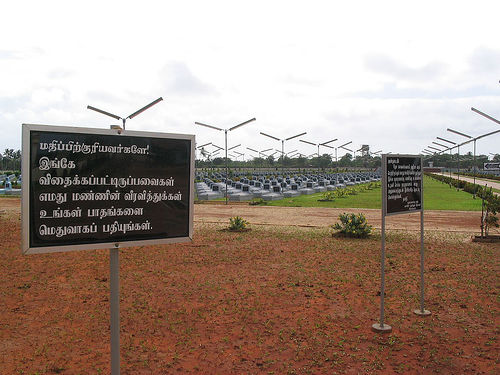
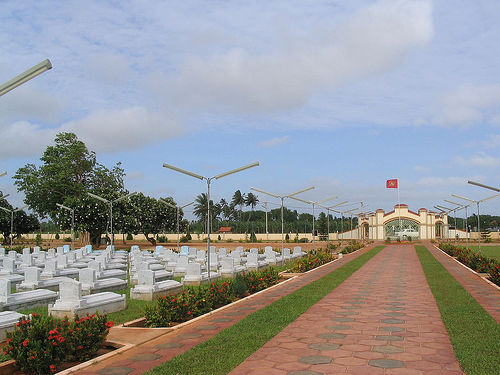
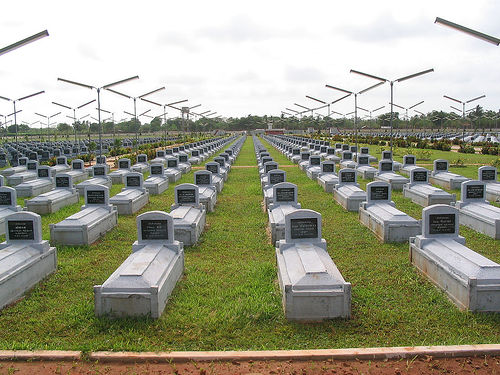
All peoples remember, honour and mourn their war dead. The 11th of November is Remembrance Day for the countries of the British Commonwealth such as Great Britain, Canada, Australia and South Africa as well as for some European countries such as France and Belgium. The Cenotaph (meaning Empty Tomb) in London carries the simple inscription "The Glorious Dead" and it is here that a Remembrance service is held each year at 11 am on the Sunday nearest 11 November. For the people of Tamil Eelam and for Tamils living in many lands and across distant seas, the 27th of November is the day on which they remember, honour and mourn those who have given their lives in the struggle for Tamil Eelam. It is the day marked by the death of Shankar in 1982 - the first death of a cadre of the Liberation Tigers of Tamil Eelam. Since then, more than 17,900 have given their lives so that their brothers and sisters may live with self respect and in freedom - in Tamil we say thanmaanam - தன்மானம்.The Tamil people do not seek to glorify war because they know too well the pain and suffering that war brings in its trail. Neither do they seek to glorify their war heroes. To glorify is to boast and magnify. And the Tamil people seek neither to boast nor to magnify. But the Tamil people do seek to remember, honour and mourn their war dead - remember with gratitude, honour with humility and mourn from deep within their hearts. At the same time, they seek to re dedicate themselves to the cause of justice and freedom for which their brothers and sisters, their udanpirapukal - உடன் பிறப்புகள், gave their lives. Those who have died shall not have died in vain. The people of the United States honour their war heroes with burial in the Arlington National Cemetry. The people of Tamil Eelam have honoured their war heroes with burial, in துயிலும் இல்லம் - Thuyilum Illam.Today many memorials (துயிலும் இல்லங்கள்) exist in Tamil Eelam where the war dead, the Maaveerars, have been buried. They are the resting places, the homes of those who will not die in our hearts - our அணையாத தீபங்கள்.... துயிலும் இல்லம், Jaffna | மதிப்பிற்குரியவர்களே! இங்கே விதைக்கப்பட்டிருப்பவைகள் எமது மண்ணின் வீரவித்துக்கள். உங்கள் பாதங்களை மெதுவாக பதியுங்கள் |
 "ஒரு விடுதலை வீரனின் சாவு ஒரு சாதாரண் மரண நிகழ்வல்ல. அந்தச் சாவு ஒரு சரித்திர நிகழ்வு. ஒரு உன்னத இலட்சியம் உயிர் பெறும் அற்புதமான நிகழ்வு. உண்மையில் ஒரு விடுதலை வீரன் சாவதில்லை. அவனது உயிராக இயங்கி வந்த இலட்சிய நெருப்பு என்றுமே அணைந்து விடுவதில்லை. அந்த இலட்சிய நெருப்பு ஒரு வரலாற்றுச் சக்தியாக மற்றவர்களைப் பற்றிக் கொள்கின்றது. ஒரு இனத்தின் தேசிய ஆன்மாவைத் தட்டியெழுப்பிவிடுகின்றது." Velupillai Pirabaharan on மாவீரர்
"நாம் ஒரு இலட்சிய விதையை விதைத்திருக்கின்றோம். அதற்கு எமது வீரர்களின் இரத்தத்தைப் பாய்ச்சி வளர்க்கின்றோம். இந்த விதை வளர்ந்து விருட்சமாகி எமது மாவீரர்களின் கனவை நனவாக்கும்..." Velupillai Pirabaharan on மாவீரர்
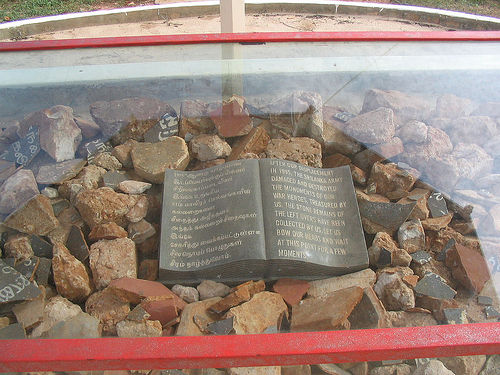
"1995ம் ஆண்டு யாழ்ப்பாண இடப்பெயர்வுக்குப் பின்னர் சிறிலங்காப்படையினர் இங்கே உறங்கிய எம் மாவீரச் செல்வங்களின் கல்லறைகளை சிதைத்து அழித்தனர். அந்த கல்லறைச் சிதைவுகள் இங்கே சேகரித்து வைக்கப்பட்டுள்ளன. சில நொடிப்பொழுதுகள் சிரம் தாழ்த்துவோம்." |
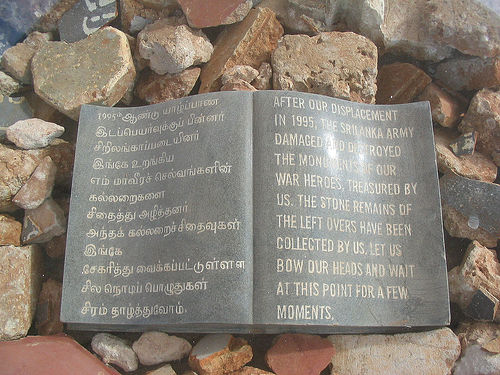
| "After our displacement in 1995, the Sri Lanka Army damaged and destroyed the munuments of our war heroes, treasured by us. The stone remains of the leftovers have been collected by us. Let us bow our heads and wait at this point for a few moments." |
"Our tradition of venerating martyrs as war heroes has always irritated the Sinhala chauvinist state. ....they feel that this tradition has become a source of inspiration to the Tamil freedom movement. Impelled by this hostile attitude, they committed a grave crime that deeply offended the Tamil nation. ..... The enemy forces committed the unpardonable crime of desecration, disrupting the spiritual tranquillity of our martyrs. Their war cemeteries underwent wanton destruction, their tomb-stones up-rooted and flattened and their memorials erased .. ... This act cannot be dismissed as a wanton display of an occupying army. This is a grave act of terrorism which has left an indelible stain in the soul of the Tamil nation." Maha Veera Naal Address - November 1997
|
Great Heroes Day
- Peter Schalk in The Revival of Martyr Cults among Ilavar, 199727th November was made Great Heroes' Day from 1989 onwards to commemorate the death of Cankar. In Tamil it is called mavirar nal, "Day of the Great Heroes". This day was prolonged in 1990 to a whole week. The 27th takes the position of a national day in the present form of the anticipated nationstate of Tamililam. Its purpose is to channel veneration of all LTTE martyrs. It prevents commemorative rituals from being dispersed all over the year. For a Westerner it can be shortly described as an agon of the LTTE in which the agony of the heroes' death is commemorated and transformed into a victory. Mavirar nal, "Great Heroes' Day'', is celebrated as elucci nal. This later expression has the double meaning of "Day of edification" and "Day of rising". The participant may choose either, one, or better both meanings, according to his or her understanding and liking. "Great Heroes' Day" is indeed a day of mourning, of agony, but it is transformed into a Day of edification and, or, rising. Veluppillai Pirapakaran was very close to Cankar. There are many stories about the last hours between the two. The fact that there are so many stories about it and that 27th November has been made Great Heroes' Day and this day even the National Day of Tamililam, indicates that the death of Cankar was a key experience for Veluppillai Pirapakaran. We have to take this experience as the seal on the determination to kill and to get killed - to the last man. The original experience and what really happened is today overlaid by levels of reflections in retelling the same story. Sankar is made a collective focal point to reexperience the mourning experience with its predictable outcome. The outcome is clear, to create a preparedness to kill and to get killed in the very act of killing. One LTTE text prescribes that the week of the Great Hero begins at 9 am. followed by the hoisting of the national banner (the Tiger flag). The entire Tamililam having risen and put on beauty, shall shine in fullness, says the text. The entire Tamil population is in happiness. The flood of more than lifesize posters depicting Cankar on 27th November at the crossroads of Yalppanam is more than impressive; it is overwhelming. All the media are full of his life story, that touches a fundamental mourning behaviour in a martial society. One LTTE text says that the tupis of the Great Heroes, houses, lanes, houses of learning, public places, the whole population indeed, and all people have themselves become holy on this day. According to this same text, the land of Tamihlam shines with new fullness, having become adorned for all these Great Heroes. According to this text, this kind of commemoration of the Great Heroes should not just be an event, but should develop into a cultural monument and become a cultural element. During maravar nal cultural performances are arranged. "Cultural performance" is an English rendering for Tamil kalai nikaleci, which literally means "performance of erudition". It can be a drama, dance, song or all three, very often combined. The LTTE has many wellknown poets writing in the spirit of the LTTE. A dramatic performance of and together with a famous poem by Cuppiramaniya Parati (18821921) made into a recital called accamillayaccamillai, "fear is not, fear is not" or enru taniyaminta cutantira takam, 'When will the thirst for liberation be quenched?", last but not least as a teru kuttu, "street drama", is highly appreciated. It is worthwhile to look at the public recital in 1990 at one of these two poems by Parati, because both give a contribution to the concepts of heroism, which evidently have been incorporated in a cultural arrangement by the LTTE, recorded, relayed on Cutarcan Television, which is the local television of the LTTE in Yalppanam, and sent out in many copies to the Tamils in exile. Parati was not only an Indian patriot; his poetic themes also show concern for the poor, the welfare of the common man, adoration of the ancients, confidence in the future generation, concern for women's liberation, children's welfare, and human values, but above all for India's freedom from slavery under colonial power. He became a makkal kavinar, '"people's poet". Although his poems were written in Tamil they became known in several Indian languages, and many a militant within the Tamil resistance of today knows his Parati by heart, in Tamil, of course. Accamillayaccamillai is the name of a poem created in 1914 by Parati, and is the first part of a refrain of that poem which is part of a larger text called Mata Mani Vacakam. The poem recited in Tamil in 1990 at mavirar naal goes like this (in the translation of K G Seshadri): Fear we not, fear we not, fear we not at all,
Though all the world be ranged against us,
Fear we not, fear we not, fear we not at all!
Though we are slighted and scorned by others,
Fear we not, fear we not, fear we not at all!
Though fated to a life of beggary and want,
Fear we not, fear we not, fear we not at all,
Though all we owned and held as dear be lost,
Fear we not, fear we not, fear we not at all!
Though the corsetbreasted cast their glances,
Fear we not, fear we not, fear we not at all!
Though friends should feed us poison brew,
Fear we not, fear we not, fear we not at all!
Though spears reeking flesh come and assail us,
Fear we not, fear we not, fear we not at all!
Though the skies break and fall on the head,
Fear we not, fear we not, fear we not at all!
In the performance of Parati's poem in Yalppanam in 1990, the poem speaks to the performers and listeners of the recital about liberation from slavery, implicitly, applied to the present situation, of the liberation from slavery of the Sinhala dominated administration in Tamil speaking areas. The poem is vague enough to find its implementation in a different situation than originally intended, in a different place and a different time from its origin. In Yalppanam, on mavirar nal, it was performed by actors of both sexes and all age groups on a stage, and the recital was in the rhythm of a march, indicating firm determination. Another poet is Paratitacan (18911964), who contributed to the martial language of the Dravidian movement and influenced the writing of the poet Kaci Anantan, who is one of the most important living and active LTTE poets. Paratitacan was a promoter of Dravidian separatism from India. There is a tradition of singing songs on many occasions, not only Martyrs' Day, celebrating the martyrs of the LTTE. They are now called pulippatukal, "Tiger songs", but they continue a tradition of parani patutal, "praising war", i.e. a genre of songs that glorifies the hero who killed elephants. This genre was popularised by parts of the Dravidian movement. The tiger songs are distributed by the LTTE on cassettes and CDs all over the world to Tamils in exile. The most famous ones are by the poets Kaci Anantan and Putuvai. Both are highly active at present creating "martial poetry" or "poetry of resistance". This constructive literary aspect of LTTE martial culture, being a kalai nikaleci, `'performance of erudition", is often forgotten in the image of the critics of the LTTE. It is very important to identify and highlight this aspect. It is both an expression and a mobilisation of the common thinking and liking of the people with the LTTE. On this level of kalai nikalcci the LTTE enjoys the strongest support from the citizens of Yalppanam. The LTTE may fail in its military adventure and experiment, but what it has achieved by its kalai nikalcci will certainly remain and be cultivated for generations to come. It will constitute the embers of resistance that no enemy will be able to extinguish. |


 மண்ணில் விழைந்த முத்துக்களே...

